
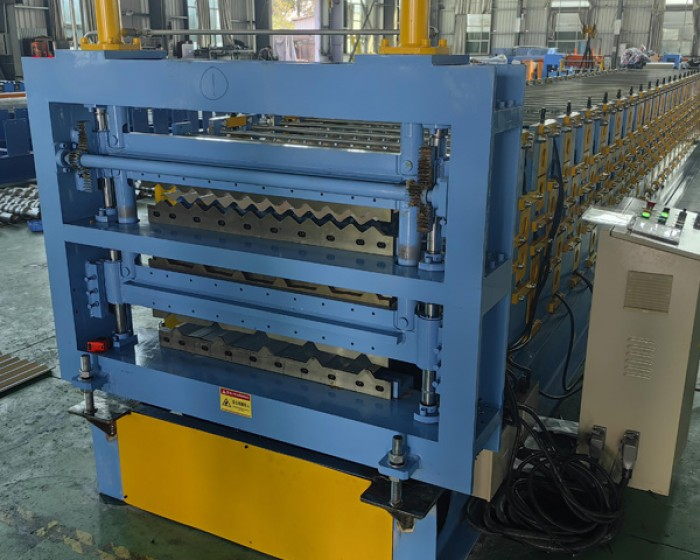
Smart machines are reshaping the future of construction and manufacturing by improving productivity, increasing precision, and supporting more efficient production processes. As industries continue to adopt automation and digital technologies, manufacturers are investing in advanced equipment that delivers consistent quality while reducing operating costs and material waste. Intelligent production systems combine automation, precision engineering, and real-time process control to create more reliable manufacturing environments. By investing in a stud and track roll forming machine and a double layer roll forming machine, businesses can prepare for future industry demands while strengthening their production capabilities.
The Rise of Smart Manufacturing
Traditional manufacturing methods often rely on manual operations and basic production controls. Modern smart machines integrate automated systems, digital monitoring, and precision engineering to improve efficiency throughout the production process.
These technologies help manufacturers respond more quickly to changing market demands while maintaining consistent product quality.
How Smart Machines Are Transforming Construction and Manufacturing
Intelligent Automation
Automated production systems control material feeding, roll forming, cutting, and product handling with minimal manual intervention. This improves production speed and operational efficiency.
Greater Manufacturing Precision
Smart machines produce steel components with highly accurate dimensions and consistent profiles. Precision manufacturing reduces defects and improves the quality of finished products.
Increased Production Efficiency
Continuous manufacturing systems allow businesses to increase production output while maintaining stable operating conditions and reducing unnecessary downtime.
Better Resource Utilization
Advanced machine controls optimize material usage and reduce production waste, helping manufacturers improve cost efficiency and support sustainable manufacturing practices.
Flexible Production Capabilities
Modern smart equipment can quickly adapt to different product specifications, allowing manufacturers to meet diverse customer requirements without sacrificing productivity.
Applications of Smart Manufacturing Equipment
Smart manufacturing equipment is widely used to produce steel framing systems, roofing panels, wall panels, structural profiles, ceiling components, warehouse structures, industrial building materials, modular construction products, commercial building systems, and infrastructure materials. Its versatility supports modern construction and manufacturing across multiple industries.
Benefits of Smart Machines
- Higher production efficiency
- Improved manufacturing accuracy
- Consistent product quality
- Reduced material waste
- Lower operating costs
- Greater production flexibility
- Reliable long-term performance
Choosing Smart Manufacturing Equipment
Manufacturers should evaluate automation capabilities, production capacity, machine durability, maintenance requirements, intelligent control systems, and technical support before investing in new equipment. Reliable machinery improves factory productivity while supporting long-term business growth.
Modern production systems also provide scalability, allowing manufacturers to expand production capacity as demand continues to increase.
Conclusion
Smart machines are shaping the future of construction and manufacturing by improving efficiency, enhancing product quality, reducing waste, and increasing production flexibility. Businesses that invest in advanced manufacturing technology will be better prepared to meet evolving market demands while maintaining long-term competitiveness.
By investing in a stud and track roll forming machine and a double layer roll forming machine, manufacturers can strengthen production capabilities, improve operational efficiency, and build future-ready manufacturing operations that support sustainable business growth.